d'Vinci Interactive is an award-winning comprehensive learning solutions provider for corporate, government, medical, non-profit, and K-12 target markets.
From Learning to Performance: Daniel Roth on The E3 Effect
November 5, 2026

What does it take to turn learning into meaningful performance? Daniel Roth, founder and president of Pangea Effect and author of The E3 Effect, shares his practical framework for helping people and organizations enable, empower, and endeavor. He discusses the connection between culture, training, ownership, leadership, and day-to-day performance and explains why successful teams need the confidence and support to keep learning, adapting, and moving forward.
Show Notes:
Training is most effective when people can apply what they’ve learned to their everyday work. Daniel Roth shares insights from his book including these key points.
- Training must connect to the work people actually do and give them opportunities to practice applying what they learn.
- Culture is not vague or abstract. It can be defined, observed, and measured through shared meaning, beliefs, and behaviors.
- Leaders need to create the conditions for performance through clear expectations, documented processes, support, and regular feedback.
- Teams need ownership, not just instructions, to keep learning, improving, and moving toward a shared vision.
- Small signs of disengagement matter. Leaders who pay attention early can address challenges before they become larger problems.
About Daniel Roth:
Daniel Roth is a visionary leader, consultant, CEO, and founder of PangeaEffect LLC, specializing in building high-performing teams. With decades of experience in business transformation, operational strategy, and workforce optimization, he has helped organizations achieve breakthrough results by aligning people, processes, and technology. Rooted in his E³ Performance philosophy-Enable, Empower, Endeavor-Daniel has developed a proven framework for driving excellence, resilience, and sustained success. His work spans industries, from scaling service teams to leveraging AI-powered analytics for continuous improvement. In The E³ Effect, he shares strategies to unlock team potential and foster a culture of leadership, accountability, and impact.
Transcript:
[00:00:00]
Introduction
Susan Cort: If you're asking people to work differently, your organization should look at this change as a strategic investment.
Daniel Roth: Transformation is change. And when you're asking for change, that means someone needs to do something different.
And I see training an investment in someone's ability to do the new work and make sound decisions. And that's why the steps begin with understanding what the people actually need.
Meet Daniel Roth
Susan Cort: That's Daniel Roth, founder and president of Pangaea Effect and best-selling author of The E3 Effect. Daniel shares practical strategies for building ownership, strengthening workplace culture, and helping teams apply learning on the job.
His conversation with d'Vinci's Jenny Fedullo and me is next on Powered by Learning.
Announcer: Powered by Learning is brought to you by d'Vinci Interactive. d'Vinci's approach to learning is grounded in 30 years of innovation and expertise. [00:01:00] We use proven strategies and leading technology to develop solutions that empower learners to improve quality and boost performance. Learn more at dvinci.com.
Susan Cort: Joining me now are d'Vinci's Director Learning Experience, Jenny Fedullo, and our guest, Daniel Roth, founder and president of Pangea Effect and the author of The E3 Effect. Welcome to Powered by Learning, Daniel.
Jenny Fedullo: Hi, Daniel. Good to see you
Daniel Roth: Glad to be on here.
Susan Cort: Well, we're happy to have you on as a guest, Daniel, and we're excited to talk with you. But before we jump into the conversation about the E3 framework, enable, empower, and endeavor, and how it can impact learning results, tell everybody a little bit about you and your background.
Daniel's Background
Daniel Roth: Absolutely. I'm based out of Atlanta, and I've worked for over 27 years, spending my career leading teams through growth and change from small operations, startups, to very large organizations, um, multi-billion [00:02:00] dollar organizations, working alongside learning and development leaders. And what I've seen is that the real test comes when people return to work.
Can they apply what they've learned? Can they make sound decisions and get the support when they need it? As an operating leader, my responsibility has always been to take what the learning development leaders do and make sure the expectations, the tools, and management support are there, and that experience led me to found Pangea Effect and write The E3 Effect to help leaders connect learning, ownership, and day-to-day performance.
Susan Cort: That's great, and this is such a fantastic theory. And Jenny, I know you dove into the book, and we're gonna talk about how this really applies in, uh, in practicality.
Jenny Fedullo: Yeah, Daniel, I really appreciated how visual and practical the book was, right? The, the infographics, the bold ideas, the personal examples. You had those great conversation playbooks and self-assessments at the end of each one [00:03:00] of the, the main phases. So it really made the framework easy to absorb, and I found myself covering pages with sticky notes, as you can see them here. Um, there were just so many ideas I wanted to try with my team, and I have biweekly touch bases with them, and I always bring one question, like we call it the question of the TB, to really deeper conversation and connection. So I've already warned them, "Hey, I have a few ideas from the book," so they're gonna get a whole new set of questions.
But I'm curious, what led you to take such a practical and interactive approach when, when you sat down to write this book? And what do you hope the readers do differently after finishing it?
The E3 Effect Book
Daniel Roth: Jenny, first, I really appreciate how you connect learning to what people actually need to do in their work. It's such a valuable conversations, uh, for the leaders listening. I'm just glad to be a part of it. Um, so when I think about, uh, the book and when I was writing the book, was really working on a [00:04:00] practical tool that can be used, can sit on someone's desk, and referred to when they were stuck. So sometimes when someone comes into a business, they're still trying to get their feet planted, and the book is for that person, but it's also for a leader when the business, uh, zigs and you're zagging. Um, and it's meant to be able to pick up and identify where that gap or that opportunity resides, and give a very practical set of tools, methodologies, and self-assessments to help identify where I'm at where, what actions I can take today, this week, this month, that's gonna make a difference.
And so that was the idea behind the book.
Jenny Fedullo: Was there a particular experience that kind of shaped your decision to include those conversation playbooks?
Daniel Roth: I have found over my career that the best opportunities that I've had for my own growth is when [00:05:00] I've been given opportunities to actually play out an idea. And, there are, in areas where I was not strong, where I did not have those muscles, where I didn't have that practice from the past, I found having a playbook to follow was very helpful. And I've brought that into the book and, and that's how, uh, I believe teams can be led well, is if they don't have that historical path or patterns to follow, we wanna give them tools, playbooks, methods, workflows, design thought out very clear, in their direction.
Defining Culture
Jenny Fedullo: So let me jump in. So one of the first thing, first chapter that's one of the first things that stood out to me was your definition of culture. I realized as I was reading it, that it's one of the first, descriptions that I had read that truly resonated with me, right? Culture is usually described in such vague terms or [00:06:00] abstract terms. It's confused with, like, perks or, or value statements
Susan Cort: or the vibe at a place, you know?
Jenny Fedullo: Right. So how did you define culture? And then I love the analogies. You talked about a web and then the garden analogies, which you actually weaved throughout the whole book, but, but tell us about
Daniel Roth: Yeah. First, thank you for calling out the definition of culture is possible. It is possible to define culture. And one of the things when I thought about writing this book, um, and a challenge that I saw over and over again when I was at other organizations, was that some had great cultures, what someone would say, "This is a great place to work.”
I enjoy. I feel like I'm making a difference. In other places that had horrible cultures, I don't know why I'm still here. You know, I don't feel like anyone sees what I do," things like that. When I asked them to define what is that culture, usually it was something nebulous, something very vague to your point and your word, and, and it wasn't measurable.
And over the [00:07:00] years, and this, this has been a 20-plus year journey, worked very hard to define culture, and maybe it's because I'm very logic-oriented, my, the, how my brain works. And I believe if you can measure it, you can manage it, right? And so there are certain things which are measurable in cultures. And culture is the shared meaning, beliefs, and behaviors that connect people to a purpose and then shape how they work together. You see it in how people respond to pressure, whether they ask for help, and, and what they believe they could contribute. And you talked about the, the web analogy. That comes from Clifford Geertz's ideas of webs of significance, we give meaning to everything that happens around us. So if I raise a concern and my leader listens, that tells me something, I'm dismissed, then that tells me something else. time, these experiences [00:08:00] shape how the team operates, and I can measure how often I'm listened to and I'm not listened to. the garden that you mention, it helps explain our responsibility as leaders, and this was really put in for the visual learners, the people that, that really help when they can visualize, um, the, you know, what we're trying to get them to take in knowledge-wise.
So our leadership provides the soil, our people are the seeds, development is the water, and then alignment and, and, and the, and support is the sunlight And so we have to pay attention to these conditions as a team grows. Maybe you've been a team that you've been performing, getting lots of recognition, but then the sunlight disappears, all of a sudden you wonder, "Are we still performing well?
Are we still doing what we need to do?" would be a question about the sunlight. in a healthcare operation I led, a leader once [00:09:00] described the experience she wants for her patients as a hug over the phone. And so we turned that into serve warmly. We call that a North Star principle, serve warmly. people could then use that principle with patients and with one another, and that's where culture becomes practical. People understand what we stand for and can recognize it the, in the way that we work. so when you talk to other leaders, can you figure out what are those key terms, those key pieces that are going to drive results that are measurable?
Culture & Learning Impact
Jenny Fedullo: Mm-hmm. So in our field, the field that d’Vinci's in, right, learning and development, we often see that culture directly affects whether learning's gonna be applied. So an organization can create excellent training, but if the environment's not there to support the desired behaviors, then the training's gonna have little impact. How do you see culture influencing whether people are able or, or willing to, to [00:10:00] perform differently?
Daniel Roth: I think we have to start from the standpoint of why is there training and development? Is that training and development work tied back to the mission and purpose of the organization, and is that team that those individuals at the, at the instructional design work that's underway and the training sessions, um, Does it all connect the dots between them? And too often I've seen where there's been incredible learning and development teams with really skilled, capable developers and trainers and implementers, but the leader of that department is not interested. It might be because there's no time. might be because they don't agree with the general direction. It might be for lots of different reasons. But I think as a learning and development leader, it's incumbent on us to go back to that [00:11:00] operations leader and figure out why that gap is. And until you can gain the buy-in, your work is not gonna get the sunlight that it needs.
Jenny Fedullo: Mm-hmm. I love that. I actually just wrote an article, Susan can attest to it.
Susan Cort: Yes
Jenny Fedullo: it, about buy-in. So go, go check it out, on LinkedIn. It's there. So enable section of, of the, The E3 Effect. You had four areas to focus on: culture, success, interviewing, and expectations. At first, I'll admit, I didn't see the through line, especially with interviewing, but then I kind of had an aha moment, and I realized, you know, each one of those areas creates the right conditions for people to succeed, even when, when someone's first joining the organization.
The Enable Principle
Jenny Fedullo: So from your perspective, why are these four areas so important to that enable principle, and how do they work together?
Daniel Roth: They're building blocks. And so these fit together because each answers a question [00:12:00] people need resolved before we can expect consistent performance. Culture answers, how do we work together here? Success answers, what are we trying to accomplish, and how will we know we're making progress? That means translating a broad company goal or, or a team's goal into something the team at an individual level can influence and see. then interviewing asks whether we're bringing in people who can contribute to that work and grow with it. I want examples of how someone thinks, how they handle a challenge, and how they work with others. And then also in the interview, it's incumbent upon me as the interviewer to be clear about the role they're actually joining so they can make a decision for themselves whether they want this role, not just because they need a job, but because they're really gonna be a fit and can make a difference. And so expectations bring all of that into the day-to-day work. What needs to be [00:13:00] delivered? Who owns it? What decisions can they make? What support's available? And when will we review the progress? And if I ask someone to improve onboarding, that just leaves a lot open. But if instead we agree on the first milestone, what good looks like, who can resolve any blockers, have something then that they can act on, and then before I measure the result, I just need to check back with them to make sure that those expectations are clear
Jenny Fedullo: Now, I like how you talk about the building blocks, 'cause that's connects so strongly what we do at d'Vinci. Before we recommend a learning solution, we're, we're getting to those building
Daniel Roth: Yep
Jenny Fedullo: What people, what do they need to do? What does success look like? What, what already exists around them?
What, what environment can... is there to help rein- reinforce that desired learning? So otherwise, training becomes a solution to the wrong, wrong problem. So I, I really like
Daniel Roth: Happens too often
Jenny Fedullo: It does. right, I'm gonna [00:14:00] jump to chapter five. You talk about Bruce Tuckman's stages of team development. I was so excited to read this.
Team Development Stages
Jenny Fedullo: I actually trained this years ago, decades ago, um, when I was a trainer doing change management and, and team development training. But it also made me think of how useful this model can be when supporting my own team through a project. So, for example, kickoff. We're always kicking off with new clients and, you know, it's important for me as a leader to remind them, "Hey, you're gonna go through forming, storming, norming, and performing, and that's okay."
You know? It's, it's a normal part of the, the process, and if there's friction, it doesn't necessarily mean, you know, you're off track. So what other ways can leaders use Tuckman's model to, to empower their
Daniel Roth: Yeah, I love hearing that you're finding ways to bring it in 'cause I, I think it's a great tool for new leaders, and that's where I actually learned about with my son in the Scouts. Learned it through, uh, his Eagle project. Um, but for me, um, [00:15:00] I- it reminds me, his, Bruce Tuckman's model of team development reminds me that a team can be very experienced and still need help learning how to work together in a new situation, that be a new system, a new client, a different leader, or a change in responsibilities that can unsettle agreements that used to work really well. So in forming, people, I believe, need clarity about the purpose and their roles. And in storming, disagreements surface, so I need to understand as a leader what's behind them and help them resolve those decisions that are holding them up. And in norming, we want to establish shared practices, and I always talk about documenting shared practices. And in performing, the team can work with greater independence there starts to get that trust that they build. When a team or a temporary team finishes, you talk about completing with one client and moving to another client, that's where [00:16:00] adjourning fits in, and it just means closing the work and carrying those learnings forward for the next project. So say we introduce a new platform. Someone may know the business very well but be unsure who now approves or on exception or owns a handoff, and they need practice. They need answers and a chance to work through the new process with their colleagues. And one of the things that I've learned applied and, uh, with, with effectiveness is I don't use the stages of forming, norming, storming, and performing as a timetable or assume any, uh, assume every objection is resistance. I recognize different people on the team might be in different places, and they can even move backward when something changes. So the useful question I've come to apply is: What does a team need from me now to move forward?
Jenny Fedullo: No, I love that. Not, everything is, is a question. I forget how you worded it. Um, [00:17:00] is, is not a, a step backward. It's not an objection, right? It's, it's validating where you are to, to be able to, to move
Daniel Roth: Well, it means that they're thinking, you know? Uh, right? And I want a team that thinks. So I don't want a, a team that just says yes to everything. I want that diversity of opinion, which with that, sometimes you'll get some level of storming until you go into norming and performing
Jenny Fedullo: Discernment, chapter seven. So I'll admit that concept caught my attention right away, even when I was just looking through the, the table of contents, because I don't think I've heard that term often used in the context of empowerment or, or leadership. But as I, as I read the chapter, I realized how closely it connects to, to what we do at d'Vinci when we partner with clients.
You talk about the side-by-sides and creating source of truth, but when we work with subject matter experts to put together the learning, you know, we, we become that single source of truth for the learner. So I, I thought you offered a very practical method for creating that single s- source, and I was gonna ask you to, [00:18:00] to walk
Daniel Roth: Yeah, and, and, um, I came up with the word discernment later in my career. it was always judging, assessing, right? Um, measuring, things like that. But as I thought about it more, um, I'm looking for people that can discern. And so discernment is knowing how to use what you know, including when to act and when to ask for help. to develop it, I need to understand the decisions people are making in the actual work. And I'll give you a quick example where discernment, uh, played out. I joined a five-person team that was preparing for substantial growth, and I started with what you just mentioned there, Jenny, side-by-sides, and found that people completed the work very differently. All were top of their game at the work, but they all did it, it individually. And documentation was sparse, um, and there were competing versions. So the knowledge existed, but much of it lived with [00:19:00] each individual person. Some companies will call that institutional knowledge. You know? It's, uh, it's inside someone. And so what we did as a team, we built a shared roadmap, and I asked the team to identify what they wish they had known on day one. And in three weeks they identified 80 topics. And so we used a tracker, very simple, it was Google Sheets at this particular organization. Didn't have to be a fancy tool with owners, priorities, and status. And contributors, each one of the five took responsibility for drafts, and the trusted role approved what was published, which was a peer. This was a peer-reviewed publish. And what we identified is, as we started digging deeper into topics, the go-to person for each one of those topic for a majority of them.
So of the five, there was, you know, individual, I'll just make up names here. There was Jane, and John, and, right, Joe, and, and, and each one of them, um, we, they were the expert, the deemed expert, so [00:20:00] they wrote that topic, that gave us a starting point for a single source of truth. It also gave people, the five team members, a role in building and improving it, and now we had 80 topics identified, a clearer picture of what the team knew and what we need to document and share. Then the leadership work that I brought in, and that my team brought in, continued from there. First, we had to figure out methodologies to keep the information current. Then we had to let people practice using it to get consistent practices across the five, but then as we started to grow, and make sure that as we onboarded new team members, then we had to discuss the reasoning behind their decisions. And what we learned over time is reliable knowledge and clear boundaries give people room to develop discernment, to develop judgment, which then they apply to discern.
Training That Delivers
Jenny Fedullo: Oh, interesting. Thank you. So chapter eight, you, you knew the title is Training, so of course I was gonna have to, to, to [00:21:00] ask a question there. But one of the statements that you wrote, I underlined I think two or three times, is transformation of culture requires investment in training. I wanna read that again for anyone listening.
Transformation of culture requires investment in training. They're not mutually exclusive. You need to transform your culture, you need training. They certainly go hand-in-hand. So that fits perfectly with the empower principle, right? If you... and organizations can only succeed when they have the knowledge, skills, and ability to, to perform effectively.
So at d'Vinci, we take our, our clients kind of through a five-step process to, to get there, and as I read your steps you laid out in, in the build training that delivers section, I saw a real connection to, to our approach. Can you walk us through your model and explain what leaders should consider when they're building training that truly is gonna deliver results.
Daniel Roth: Yeah, Jenny, I'd be happy to, and I'll, I'll share this with your, with your audience as well. Every organization that I've come [00:22:00] into, and I've been in the largest of organizations and startups and in between, all have opportunities with training. I have yet to walk into an organization that has it all resolved. It could be because they're going through massive transformation, continuous change, and there's just always something new to roll out. Or it could be because while the trans- while the learning development team is top-notch, best, you know, world-class, the documentation deeper down isn't there to support that, right? Or it could be just because that team hasn't been invested in as they need to be. So let me start with why I said that transformation, the starting point is, is training, is because transformation is change. And when you're asking for change, that means someone needs to do something different.
And I see training
Jenny Fedullo: Defintely.
Daniel Roth: an investment in someone's ability to do the new work, to do the work, and make sound decisions. And that's why the steps begin with [00:23:00] understanding what the people actually need. So my steps are, audit and listen. Talk to recent hires and to the senior tenured team members doing the work. What helped them? What was missing? What slowed them down? Second, map the path. Make the milestones from onboarding to proficiency visible. So people understand what they're working toward and can see their progress. Different area of the book, I talk about building teams that win. love the experience of winning, and so these milestones can be achievable and celebrated as they're met along the way. Third, design for ownership. Give people structure, tools, and real situations to practice. They need to participate in their learning. They need to have that active participation and understand how to find answers themselves. Then fourth, equip and engage. We wanna give mentors the time [00:24:00] and responsibility to walk alongside the learners, help them work through difficulties, and then build that confidence. The last is, fifth is test, measure, evolve. Pilot the approach and look at performance. Can the person complete the task? Can they explain their reasoning behind their decisions? They recognize when they need help? And then use what you learn through this framework to improve the training. for example, I might ask someone to find the current procedure and work through an unfamiliar scenario lets me see whether they can apply what they learn and recognize when they need help. I've just found over the years that the investment in training pays off when people can use the learning in their day-to-day work, and they attach the meaning behind their work to the purpose of the organization or of that team.
Common Training Mistakes
Jenny Fedullo: What, what are you seeing in working with organizations? Where, where are they making their, their mistakes when it comes [00:25:00] to investing in training?
Susan Cort: How long do we have
Daniel Roth: Yeah.
Susan Cort: for this answer?
Jenny Fedullo: Right.
Daniel Roth: That's very fair. I think, I think, I think this is one of those there's no one silver bullet, right? Um,
Jenny Fedullo: Right
Daniel Roth: I was to name a few that come immediately to mind that I've just seen repeated, one is poor documentation. You- it, it doesn't matter if you invest in training, but if you don't have the documented processes, you don't have the single source of truths, um, you're gonna end up with more of the same or something even worse potentially. Second, I, I see it as a team that is oftentimes underfunded and underdeveloped. They also need their own training, their own development. There's a lot of great technology coming out in the learning and development field today where I think that they might be-- they might know what worked always, but is there a more efficient path today? Um, you know, are there different tools and capabilities available, or can we just expand their [00:26:00] tool set, right? So I think investing in the training group is also a gap. The last thing is, I think that there's, and this is bigger than, than the training and, and learning development, many organizations I see what I call execution gap, that is the business has a clear strategy.
Let's just assume the business has a clear strategy, 'cause if they don't, that's a different problem, right? But if the business has a clear strategy and set of objectives and goals that they're going for, all too often I've seen the operation start to go off path from that strategy, not for any reason that is intentional.
In fact, it's usually someone very well intentioned doing a workaround because they have a problem to solve right now, and then that workaround gets repeated and repeated, becomes a silent truth, right?
So we wanna close execution gap, and I think training's such a critical part of that.
Jenny Fedullo: Yeah. I like your, your point about single source because it also gets to relevance too, right? So [00:27:00] you're not truly training how people are doing the job, right, because it hasn't been documented, the relevance is lost and the buy-in for that learner is lost, right? They... It doesn't feel relevant or connected to them and how they actually do, do
Daniel Roth: Yeah, this is why I talk about piloting it, because I think it's very important to your point. Um, if it doesn't ring true to the end users, then you're gonna end up with a gap at some point, right? And it's, and, and it's gonna be a lot harder to come back from because the second time there's a little bit less trust. If it happens again, now there's a lot of lack of trust, right? And it's hard to rebuild that
Jenny Fedullo: Yeah, good point. Agreed.
Endeavor vs. Execute
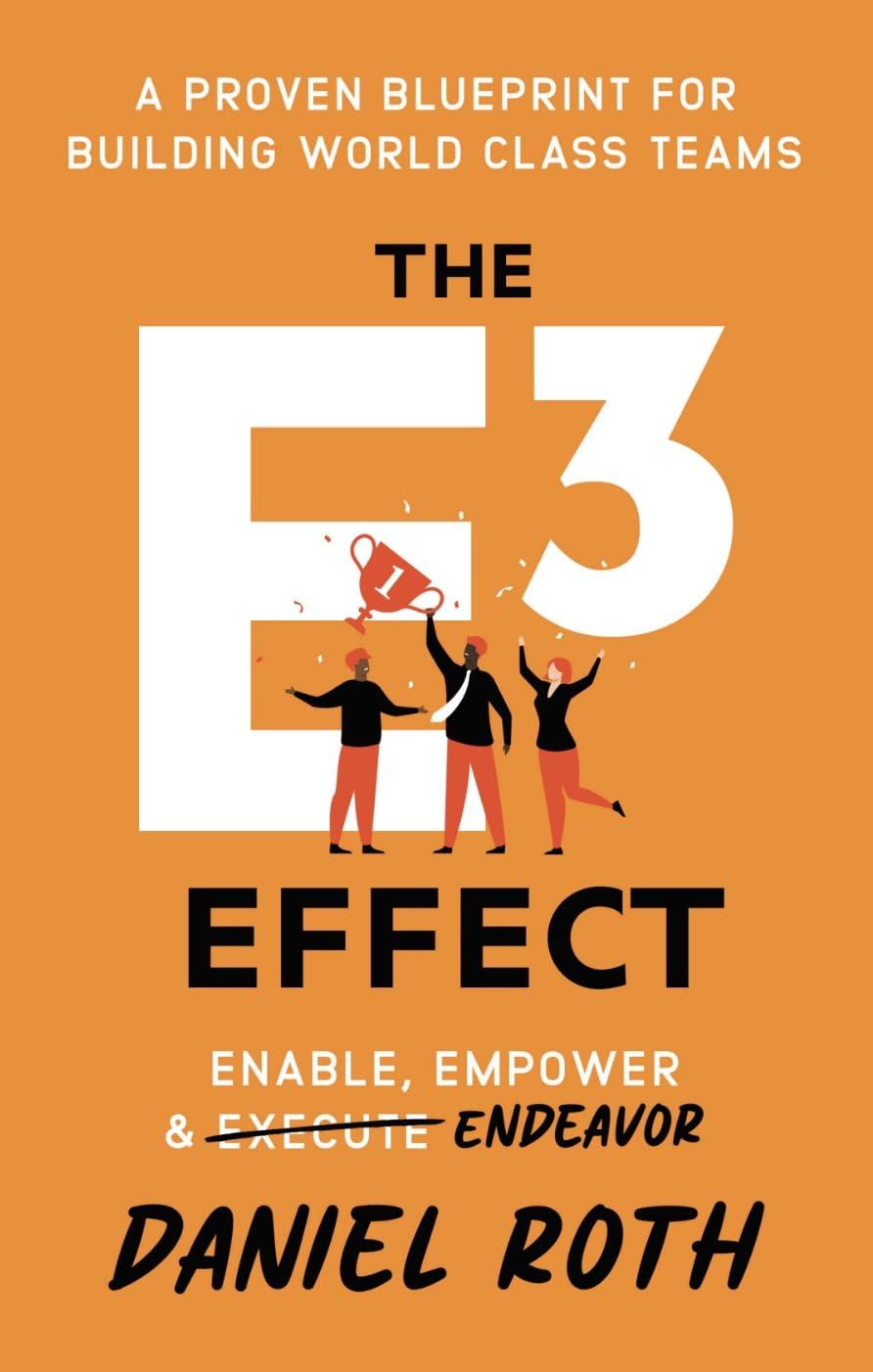
Jenny Fedullo: So Daniel, the final phase is endeavor, and I couldn't help but notice on the cover, you- it's in plain sight, the word execute appears as the third phase. You crossed it out. So I have to ask, what happened there, um, and why did you ultimately choose endeavor instead of execute?
Daniel Roth: Yeah, [00:28:00] So it's, I, I thought about that a lot as I was writing the book and, and working through what am I really looking for from a team? And execution matters, of course. We need to deliver.
Jenny Fedullo: Mm-hmm.
Daniel Roth: really interested in what happens when the team understands the goal well enough to help carry it forward.
An endeavor captures the ownership and continued effort involved in making a shared vision real. Execute tends to have a clear endpoint. You've executed something, it stops at some point. You might execute another thing. But companies don't complete. If a company is successful enough to actually achieve their strategy, then they tend to evolve into a new strategy.
They endeavor for something more. So in the book, The E3 Effect, that third phase is about buy-in and fulfilling the vision. People see how their contribution matters, and they take responsibility for a step toward the [00:29:00] goal. They recognize when something needs a change and bring their own judgment to the work.
You might see that when someone comes to you and says, "Here's a problem I found. Here's what I recommend, and here's what I wanna do within my authority." They still need support, and some decisions still belong within the leader, but they're participating in how to reach the outcome. So my responsibility as leader is to keep the vision clear, to gain agreement with the achievable steps, review the results, and then acknowledge contributions along the way.
An endeavor doesn't mean effort alone is enough. We still have to deliver what we committed to. It means the team, though, has enough ownership to keep moving, to keep learning and improving without waiting for me to direct every step
Susan Cort: I love that. I mean, because like, to me,
Jenny Fedullo: Susan.
Susan Cort: ex- I think we're, we're both giddy [00:30:00] about this, but I, I think, um, execute alone just feels very transactional to me. But with the endeavor as more of an inspirational word, I think the execution can become, uh, more impactful, not just for the team, but for the people who are you're trying to train.
So there's just, there's something that just feels better about the word endeavor. Uh, of course, it leads to execution, but execute alone just i- isn't right. So I think that was wonderfully intentional, uh, crossing that out on the cover.
Jenny Fedullo: Learning development we often talk about implementation as if, like you said, the finish line, right? But real performance change requires the continuous practice, reinforcement, feedback, right? So endeavor really, really is the word. It better reflects that, that ongoing process and so much
Daniel Roth: It also leaves space for failure. Teams that are really striving for something big,
Jenny Fedullo: Mm-hmm.
Daniel Roth: There needs to be space for failure, for learnings, [00:31:00] for takeaways, and then going at it again and improving. It also leaves space for continuous improvement. And so that's the idea there is we're never just one and done.
There's always something more that can be done, uh, for the business overall
Advice for Leaders
Susan Cort: Daniel, you've worked with so many clients throughout your career. What have you learned from them that you can now in turn, uh, turn that into advice for our listeners as they're looking to maybe implement some of, uh, your theory in what they do?
Daniel Roth: Yeah, I, if I, if I'm with a client, um, typically where we start is let's find one set of tasks or work that creates rework or has a lot of friction and pain in that process. And then what we do is we dig in. We ask the person what they're doing. W- w- who are we delivering this to? What are we delivering?
Who owns it? What can you decide? What gets in the [00:32:00] way? When will we review progress again? And then we tend to agree on one change and revisit the actual work on that review. And so what happens over time is if you do one and then another and another, it starts to exponentially gains, like a snowball effect over time.
And so my, uh, my thought and what I bring in is before you determine the next best action, shadow someone trying to, trying to do the work. Find out what they know, what they can decide, and what's getting in their way. That's gonna give you a much better place to start than some boardroom meeting or some leader meeting where you went through a bunch of slides and now you know what you need to go do.
Check in. Make sure that the real pain, you clear on what it is, and I think you'll see breakthroughs. And that's the work we do at PangeaEffect.
Noticing Disengagement
Jenny Fedullo: Yeah, I, I love that. And one other thing was in the book, I think it was in the maybe the middle section, the empower section, you [00:33:00] talked about noticing that first moment that an employee is disengaged and, and you can measure that. I thought that was, that was so powerful. So anything to add there?
Daniel Roth: Yeah, I, That's actually, um, it's such a crystal clear story for me, so for your audience, um, here. So we had an employee in the book, I name him Jamie, um, and, uh, I knew him well. He was a leader, and he was the one that always solved the har- hard problems. The harder it was, the more he would jump in, the bigger the challenge.
But not just on work stuff. If someone had a flat outside, he was the first one to raise his hand to go help out with the flat. That was just Jamie, and he did this for years. And then one time we had a client that had a major problem, and Jamie didn't raise his hand. I noticed it, but I thought, "He's probably busy."
Then it happened again and again, and then I noticed someone actually had a problem on a personal front, and he also didn't speak up then. So [00:34:00] knowing Jamie well enough, I just said, "Hey, Jamie, do you wanna go grab some lunch?" And, and, you know, and so we went out for lunch, and before we even got very far at all in the car, I turned to him and, and, and said, "I wanna ask something, and if it doesn't land right, just let me know.
I'm gonna stop right away. But it feels to me like there's a level of disengagement from where it was before versus now. I'm happy to give examples." He said, he looked over at me and he just was, "You noticed?" And so I didn't have to give a single example. And I said, "Yeah." And, and, and he said, "Well, um, you know, you know my wife and I, we're, we're actually trying to have a baby, and, um, we bought a house, or we're saving for a house, actually.
Um, and, um, and so we're just working an extra job." We're doing, I don't remember if it was Uber Eats or what it was, but something in the evenings after work. And so he was exhausted coming into work. And we worked together, we identified why he was doing that, and it took quite a bit of [00:35:00] time, but we ended up being able to find where he could bring more value to the business, 'cause he was such a capable human being, and he wanted to.
And in doing that, he ended up earning a promotion, he ended up earning more pay, and he ended up stopping the other work, and then he was the superstar that he was before and continued his, to build his career.
Jenny Fedullo: There's just a few, you know, s- several examples like that where you think things aren't measurable that, that really are. You can measure, measure disengagement and how that is gonna impact your culture. So I really a- appreciated that as well.
It's just so important for leaders to be present, and, and some of the principles you brought through, through the, the book, The E3 Effect, is, is, uh, pretty powerful
Daniel Roth: I'll leave one last thought from, from, it's actually something Oprah said. I'm gonna paraphrase it, um, 'cause I'll never be able to say it quite as good and as, as Oprah can. But listen to the whispers t- in your ear, uh, because whispers will become voices, and if you don't listen to the [00:36:00] voices, they will become yells.
And if you don't l- become listen to the yells, they will become crisis. And if you don't listen to the crisis, they will become major issues, right? And so when you, when you get those whispers in your e- in your mind, pay attention to them. They might actually mean something.
Closing & Book Info
Susan Cort: Such, such good advice. Now, if you were really gonna be like Oprah, you'd be giving a copy of your book out to all of our listeners. But but since you can't do that, tell people where they can learn more, Daniel, and where they can pick up a copy of your book?
Daniel Roth: Yeah. Thank you so much, Susan. Uh, you can pick up my book at, uh, at Amazon, The E3 Effect by Daniel Roth, R-O-T-H, or you can go to my website pangeaeffect.com and learn more about what we do, and there's a link to the book, uh, on my website as well
Susan Cort: Wonderful. Jenny Fedullo, Daniel Roth, thank you very much for joining us today
Jenny Fedullo: Yeah, it was my pleasure. Thank you
Daniel Roth: Thank you
Susan Cort: [00:37:00] My thanks to d'Vinci's Jenny Fedullo and our guest, author Daniel Roth. We hope today's conversation sparked a new idea or perspective that you can bring into your own learning initiatives. For more insights and resources or to connect with our team, visit dvinci.com. Thanks for listening to Powered by Learning.
Ready to Connect?
Contact us today to start the conversation. We work with you to find innovative solutions that drive a sense of shared accomplishment and trust.