d'Vinci Interactive is an award-winning comprehensive learning solutions provider for corporate, government, medical, non-profit, and K-12 target markets.
Learning to Lead with AI: SmartLab on Productive Struggle and Human Skills
September 30, 2026

Lessons from SmartLab’s approach to preparing students for an AI-powered world can also strengthen adult learning and workplace development. Dr. Jennifer Berry explains how project-based learning, productive struggle, and durable human skills help learners use AI to enhance—not replace—their thinking.
Show Notes:
Dr. Jennifer Berry of SmartLab shares that preparing people for an AI-powered world is less about teaching them to use AI and more about strengthening the uniquely human skills AI cannot replace. Her top takeaways include:
- Preparing learners for AI is about more than technology. Communication, collaboration, critical thinking, systems thinking, computational thinking, and adaptability are durable skills that apply across careers and technologies.
- Learners need a strong sense of identity and belonging. Berry defines STEM identity as the belief that you belong, can master rigorous challenges, and that your ideas add value.
- Productive struggle is essential to learning. Failure and discomfort help learners develop new ways of thinking, reflect on what did not work, and build the confidence to approach future challenges.
- AI should enhance original thinking—not replace it. Learners should first wrestle with a problem, develop their own ideas, and then use AI to refine, improve, or scale their work.
- Organizations must create room for experimentation and course correction. Leaders can prepare employees for change by recognizing effort, supporting thoughtful risk-taking, and allowing people to learn from unsuccessful attempts.
About Dr. Jennifer Berry
Dr. Jennifer Berry is the Chief Executive Officer for SmartLab. She has an extensive track record leading innovation and growth in multiple top K-12 education businesses, and will further CLS’s mission to transform the lives of future generations through innovative, career-focused STEM education solutions. Dr. Berry has spent the last 15+ years in senior leadership positions for prominent K-12 organizations including Presence, After-School All-Stars, Quantum Learning, and Kaplan. Dr. Berry holds a Doctor of Education (EdD) in Organizational Change and Leadership from the University of Southern California (USC), and her commitment to education is inspired by her daughter and a love of lifelong learning. She is a resident of San Diego, California.
Transcript:
[00:00:00] Susan Cort: What does it really mean to prepare students to lead in an AI-powered world?
And what lessons can adult learners take away?
Dr. Jennifer Berry: When I talk about getting students to be leaders in an AI-powered world versus, being led by it, it isn't teach students how to do better prompts in AI. What I'm talking about is teach students the durable skills that are uniquely human: communication, collaboration, critical thinking, computational thinking, systems thinking,
Susan Cort: that's Dr. Jennifer Berry, CEO of Smart Lab. She explains why durable human skills, productive struggle, and the confidence to solve problems independently matter for both young learners and today's workforce. Next, on Powered by Learning.
Announcer: Powered by Learning is brought to you by d'Vinci Interactive. d'Vinci's approach to learning is grounded in 30 years of innovation and expertise. [00:01:00] We use proven strategies and leading technology to develop solutions that empower learners to improve quality and boost performance. Learn more at dvinci.com.
Susan Cort: Joining me now are d'Vinci Lead Instructional Designer Christine Kurtz and our guest from SmartLab, Dr. Jennifer Berry, Chief Executive Officer. Welcome to Powered by Learning
Christine Kurtz: Thanks for joining us.
Dr. Jennifer Berry: Oh, I appreciate that. Thank you for having me.
Susan Cort: Jennifer, start off by sharing a little bit about your background and your role at SmartLab.
Dr. Jennifer Berry: Excellent. Thank you so much, um, and thanks again for having me. I'm so happy to be here. as you mentioned, I'm Dr. Jennifer Berry. Um, I am the CEO of Smart Lab. My career trajectory was pretty interesting. I started actually as a professional dancer, so I was in the professional dance, , artistic landscape before I entered int0 you call the traditional workforce.
From my background as a professional dancer, I went into the retail organization, uh, landscape up, uh, for about [00:02:00] 15 years. So I really learned the ins and outs of good customer service and strong marketing and great operational controls, andreally enjoyed my time in the retail stint, until I got a call while I was in my master's program, or actually ending up my master's program in public administration, um, to get into the education world. And, I was really excited about that 'cause I felt like it was really about me laying my head down at night and feeling like I was really contributing to something greater than myself, , and helping others become the best versions of themselves. So that was really exciting for me. And from there, I've been now multiple , decades in the education space, doing everything from supplemental tutoring to afterschool programs in the nonprofit landscape to, , working with the special education community, to helping teachers become more effective in their craft, to helping students in social-emotional ways as well as academic ways.
Um, and then now landing as a CEO of a STEM learning company. Smart Lab is a integrated ecosystem that sparks aha moments for kids so that they [00:03:00] can gain their STEM identity. Uh, so I'm really enjoying being the, uh, CEO of this company. What's interesting about my journey is many people would say, like, "How, how, how did you get from professional dancer to running a STEM company?"
Right? It feels very... Right? And I actually would say that all of us have STEM identity, and we define STEM identity as that, that, um, that inner feeling, that belief that you belong, that you can master rigorous challenges, and that your ideas, um, have value and add impact. And so I really believe that my journey across all of those different career choices in my life have really given me that, that foundation, that mindset that I belong, that I can master rigorous challenges, and that my ideas add value and, uh, make an impact.
So I really believe I have STEM identity, and so that, that really transfers and translates into the curriculum we develop, into the learning environments that we put in front of the K12 learning ki- students. Um, and so I really am excited about being and running a STEM organization where we talk about mindset, not just the tools and kits and equipment [00:04:00] that we give for kids.
Susan Cort: That's a wonderful background. Everybody's got such a different story of how they got from their early career to where they are now, but I love the dance theme, just thinking about how you have to be agile and learn how to pivot, and what a great lesson to learn to be in learning and development. So thank you for sharing all that.
Dr. Jennifer Berry: Yeah. Thank you.
Christine Kurtz: Can you talk to us a little bit about the mission of SmartLab and why you think it's so critical in today's ever-changing and rapidly changing technology world?
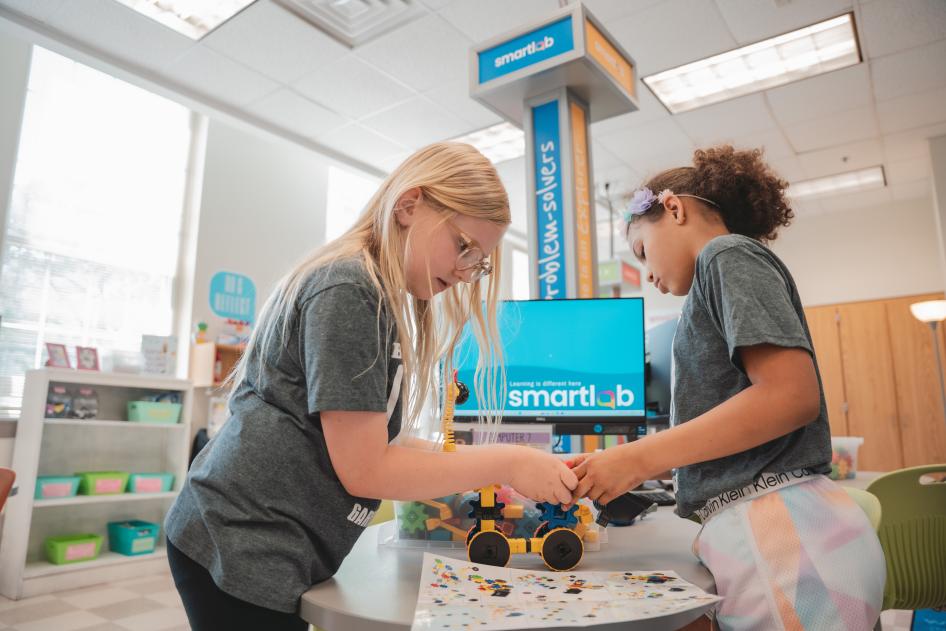
Dr. Jennifer Berry: Yeah. Well, I mentioned how we define SmartLab, right? We're an integrated ecosystem that sparks aha moments that drive STEM identity for learners. But I'll talk a little bit about that mission a little bit more. So believe STEM identity cuts across every industry and every career, both the careers and jobs that are current, as well as those that haven't even been developed yet. And our mission is really to make sure kids in the K-12 space are set up for success in life, school, and in life. And right [00:05:00] now, with us being an AI-powered world, it's really critical and important for students to have those durable skills that they can, that they can use as transferable skills in the workforce, no matter what career they choose, no matter what industry they're in. And so our mission is really to give students project-based, hands-on learning opportunities, um, where they can fail, where they can learn to collaborate with others, where they have to really critically think on how to solve a problem. And so by doing that, um, you know, you can see we, we call ourselves Learning is Different Here as our sort of tagline to Smart Lab, and this idea that in a project hands-on learning way, through our curriculum, through our kits and equipment, through our cer- our facilitators, through our learning environment, you can get multiple aha moments that then give you those durable skills, that give you that STEM identity so that you can thrive in this AI-powered world.
We always like to say, what we're trying to do for students is have them lead in an AI-powered world, not be led by it
Susan Cort: [00:06:00] Before we get too much into the thinking behind Smart Lab, j- just talk a little bit about how does this work in practicality so people can understand, you know, how you work with, with the teachers and the school districts, uh, to, you know, to really help, uh, shape the next generation.
Dr. Jennifer Berry: I lo- I love that question because it, it, it's right after the first question, which is what's your mission, right? And I talked a lot about that mission of the STEM identity, right? To get learners to be leaders in an AI-powered world through these durable skills. But then the question is, well, how do you do that?
What's the, what's the way? And then we're like, okay, well, it's by gaining a bunch of aha moments so that student is, like, gaining and multiplying and scaffolding those aha moments so they can get that. Well, how do you do that? That's our integrated ecosystem. So in practical nature, we have five components of our ecosystem.
So in school districts, what we sell to school districts is a full ecosystem with five components. One is the, um, actual learning environment itself. So everything from the furniture to the, [00:07:00] the pylons, to the kits, the computers, right? Then we also sell the curriculum. So the curriculum is curated, you know, to state standards, um, aligned with, uh, what the students need in order to, um, solve the problems that we put in front of them.
So we have a full curriculum set, so we sell the curriculum. Then we also sell all the kits and equipment. So the school district will get the learning environment, it's a full room of furniture or just shelves that they can put, that the teachers can pull from, so depending on what the school needs.
So that's the learning environment. The curriculum itself, which is how the, the facilitators can pull from the curriculum in order to deliver the content to the students. The kits and equipment, which are really important. Because we're a project-based, hands-on learning environment, we need the kits and equipment to match with the curriculum.
So you don't use the curriculum as standalone. You need the, the actual manipulatives. You need the actual kits and equipment to really enhance that learning, so we also sell all of the actual kits and equipment. Then we certify the facilitator. So [00:08:00] there's a, uh, certification. You get a foundations training.
There's extend trainings. We wanna make sure that we're there with the facilitator across their journey, beyond just the initial sale. So we continue to partner, support the facilitator themselves through badging and through ongoing professional development as well as community rooms, as well as, ways in which they can communicate with other facilitators across the country. And then lastly, what we sell into the school district is, um, support and partnership. And that support is obviously everything from our tech team, but also partners. We bring partners from the outside, so actual real practitioners in, um, the careers that, uh, and industries, and have them speak to the kids so kids can see themselves in representation ways but also in, "Oh, I didn't even know that was a career.
I didn't even know that was a thing." So we help bring the community into the school district to help support the learning. So what... We are not... just like an i- an ecosystem, when you think about an ecosystem, we are not one thing. You don't just buy curriculum from our- from us or [00:09:00] just buy the learning environment from us.
We really believe in the full ecosystem in order for the student to get those aha moments, and then therefore get their STEM identity. So it's a full, um, sort of, uh, approach to learning that is different and that can be integrated into the school as a standalone or pushed into classrooms that the that the teachers themselves can pull into their, their, um, their units and into their curriculum.
Christine Kurtz: I love hearing how thoughtful and holistic this approach is. What I haven't heard you say is, "We're teaching students how to write prompts for AI," or, you know, "We're teaching students..." Um, so you've mentioned a couple of times this idea of STEM identity. Can you define it again and maybe translate for our-- what that would look like for an adult learner in a workplace?
How does that, you know, go across ages?
Dr. Jennifer Berry: Yeah. So we define STEM identity as the learner's self-belief that they belong, [00:10:00] that they can master rigorous challenges, and their ideas add value. And that's how we've defined it. If you notice, STEM identity definition that we've coined has nothing to do with science, technology, engineering, and math,
Christine Kurtz: Right
Dr. Jennifer Berry: Because we really believe that every career, every industry uses STEM applications and needs a mindset to be able to master rigorous challenges. And that mindset is really important because if you don't believe you belong or you don't believe you can master rigorous challenges, or you don't believe your ideas add value, um, you will have trouble, uh, thriving in the workforce. Um, and so because we're a workforce-ready type of organization trying to help organizations get there, that's really important to us. So that's how we've defined STEM identity. How that shows up for the learner is through our certification of our facilitator and in through our curriculum development. So in our curriculum development, we aren't, um, there's not step-by-step instructions.
Instead, we start with the problem that [00:11:00] needs to be solved, and then we start with ways in which a student could think about and ask questions to solve that problem. and that's, the curriculum development is aligned to that. So if they're trying to solve a world problem, there's not steps that they have to follow to solve the problem, but more ways to think about the problem and tools that they could pull in to try to solve that problem. On the facilitator side, we really train the facilitator on how to ask probing questions, not to solve it for them, not to give them, "Here's the step-by-step instruction. Here's the prompt," as you referred to, the AI prompt that you could just ask and it tells. But instead, um, how to think about that, that problem that you're trying to solve, let the students sort of fumble and mumble around by themselves without jumping in and solving it for them, and only adding, uh, support when necessary.
And that is a very unique skill set for educators this, these days because it's so easy, because there's a lot of teaching to the test. It's very easy to [00:12:00] jump in and, um, teach exactly what the student needs to learn in exactly the scaffolded way that they need to learn it in order for them to gain that knowledge.
And we work really hard for the, our facilitators to not jump in and to let the students sort of have productive struggle in their process by asking probing questions, by, um, allowing them to... Uh, uh, we even teach them how to walk away when a student is getting frustrated. So there's real methodology in how we teach facilitators and how we align our curriculum to support the learner and to support, uh, gaining that, "I belong, I add value, and I can master rigorous challenges" feeling.
Christine Kurtz: Can we talk a little bit more about productive struggle? Because that's a term you mentioned the last time we spoke, and ever since then, uh, since we last spoke, I'm like, "Okay, let's, let's be uncomfortable for a minute before I just default to asking for help." So why do you think that's such an important part of the learning process and, and, you know, not just defaulting to using [00:13:00] AI to solve your problem?
Dr. Jennifer Berry: Yeah. So I'll say the personal answer, and then I'll say the, the, um, sort of academic, the academic answer. The person- the personal answer is I've had to fail a lot in my life, and every time I failed, it's, it's given me another way of thinking about the problem. Or it's given me a reflection moment, right?
And reflection is very, key, I believe, to my success. I, I'm constantly analyzing, "Why didn't that work?" "What is it about that that I could do differently next time?" Or a- sometimes just sitting in the pain of that, right, the failure, and next time something comes up, I'm like, "I'm not gonna do that again." So that, that sort of personal learning, um, in my own journey has really given me, um, this, this, this concept that all learners, whether you're young all the way up to, you know, you're, you're senior citizen and beyond, um, is necessary for that, um, that learning to [00:14:00] occur. the academic answer is that, um, the brain is constantly-- You know, neuroscience tells us that the brain is constantly reinventing itself, and it reinvents itself sometimes through, uh, pattern disruption. Right? And when you pattern disrupt, which is sometimes failing, right, productive struggle, kind of pushing through, I don't really know, the brain works to find the next, the next, um, potential answer. It finds the ne- it, it actually forms, you know, strengthens the myelin in the brain to develop new ways and new neural pathways in order to solve problems. So both my own personal experience in productive struggle and th- what neuroscience tells us is it's necessary for our brain to struggle through things in order to get to the next place, in order to develop, um, neural pathways that take us to new levels in the brain and to open up places in our brain that we are, um, maybe haven't tapped into yet. So that, to me, is sort [00:15:00] of the, both the personal and academic reason why it's so important to have productive struggle. And AI is a beautiful thing, but it, it, it-- if it's always used first in the solving of problems, if it's always in use first as the place to go to, um, something, uh, your brain is not developing and it'll get stale, it'll get stagnant.
It'll get... In places, things will shut off, right? I was talking to my mother the other day about her hearing aids, right? She has hearing aids as she's aged. She was a flight attendant, so she had a lot of ear popping issues, and now she has hearing aids, and when she doesn't wear them, she actually feels like her brain, there's something about her brain that's changing. And when she wears them and she can hear the sounds, she can hear the birds, she can hear-- even when she just puts them on in the morning. 'Cause I'll say to her, "Mom, I know you're just laying in the bed by yourself, but you should put your hearing aids on because you wanna hear things around you," right?
You wanna productively struggle through, "I'm trying to read [00:16:00] and I'm hearing an outside sound that is disrupting my reading pattern." And so that is important because it's forcing the brain to think. It's forcing the brain to not shut down parts of your brain that, um, that you need, right? In, in maybe challenges that come in front of you.
So that-- And there's some science behind that too, with the hearing, um, especially for those that heard before and then, you know, are, are learning to hear again. And so there's some science behind that. So I think about that, um, in this setting too. We h- we can't just go right to a source that's gonna give us an answer.
Christine Kurtz: Mm-hmm.
Dr. Jennifer Berry: have to sort of push through, let me try this. Ugh, that didn't work. Let me think about this. Uh, is there a different way?" Right? Where AI can help is when maybe you have, like, three different solutions and you wanna say, "Help me refine these three solutions," or, "Help me scale these three solutions," or, "Help me take this solution that I feel really excited about and, uh, polish it up." Right? [00:17:00] Really, um, get it to a place that can maybe scale to the next place or create a sustainable model under this idea I have. But it's really your authentic idea, not somebody else's that was scoured through many internet sources. So that's why productive struggle for me is so important. And, um, I just, I firmly believe that especially for young people, it's important for them to fail a lot
Christine Kurtz: Mm-hmm.
Dr. Jennifer Berry: in order to thrive fully
Christine Kurtz: Yeah. It's n- I feel like it's not something you hear a lot. I think you hear like, "Work smarter, not harder." And so there's this idea of like, if it's hard, I'm doing it wrong. If, you know,
Dr. Jennifer Berry: Yeah
Christine Kurtz: I'm struggling, then I'm not going to get to the point I need to be. Um, so what, what would-
Dr. Jennifer Berry: or the, or the, or the rigor, right? There's a lot of people that talk about rigor, right? And so what is it, depth or breadth? Which one's more important, depth or breadth, right? And some people are like, "Well, I wanna get things to things faster. I wanna get things done faster." And so [00:18:00] AI makes things faster.
Christine Kurtz: Right
Dr. Jennifer Berry: is that just giving you or is that giving you depth
Christine Kurtz: Yes.
Dr. Jennifer Berry: of whatever you're trying to solve?
Christine Kurtz: There is this push, and there-- I feel like there will always be this push from organizations and corporations to be more efficient and, you know, increase productivity.
So what do you say to the organizational leader or the corporate leader who is, you know, looking for that increase in productivity and efficiency while balancing what we're saying there's value in the human mind still and the, and the struggle behind it?
Dr. Jennifer Berry: Mm-hmm. Yeah, it's a great question. I think about it even as being a leader in, in an organization that I run, and, you know, 'cause, you know, I do care about product- productivity and efficiency and, um, that's important to the bottom line, it's important to the workforce, workforce happiness. Um, um, it's, it- it's important to even our growth mindset, right?
Of [00:19:00] how we function and, and solve problems at my org. But honestly, what popped in my head was the youth that we serve. And I know that's not exactly your question 'cause you were talking about in an organizational sense, but if we give young people multiple chances to fail, multiple chances to use this productive struggle in a very controlled and supportive, right, sort of manufactured environment like a smart lab, the more they have that, the faster they'll be at solving problems and being able to recognize when things aren't going as planned, Which then will serve an organization later, right? 'Cause if we raise a bunch of students that are only using AI, or not struggling, or not believing they belong, or not adding-- feeling their ideas add value, by the time they get to f- to the workforce, they won't even know how to struggle. And so something comes up that is, um, a, a external disruption, right?
A mega or a macro disruption, right? Like [00:20:00] administration change, funding streams alter, right? Whatever the case may be, they don't know how to handle that if they haven't struggled along the way, if they haven't had many times where they've had to problem solve with a c- a, a group of other individuals in a way that they had to work through their collaboration with each other in order to solve a problem. If you don't do that multiple times as a young person, when you get to the workforce, when problems come up and you're typing into AI, "How do I solve this problem? Funding stream just went away," AI might go, "Well, I don't know. a national pandemic has never happened before."
Dr. Jennifer Berry: Right? Like, if you think about when COVID happened, if we were typing in questions to AI, it would've given answers that actually weren't, um helpful because it wouldn't have had experienced a nation- uh, you know, a global pandemic of that, of that scope, [00:21:00] in recent years, right?
So it would've not given answers, and then you would've had a workforce that sort of was stuck in like, "Well, I don't know what to do because I don't know how to think through and how to problem solve on my own. Because AI's giving me the same answer over and over and over again, and that's not what I'm seeing," "Or that's not what I'm feeling." So I feel like my answer is to always... A- and, and maybe it's 'cause I run a K-12 organization, focus on the young, um, invest, invest in the young, invest in, um, hands-on project-based learning for young people so that when they get to the workforce, they have that muscle built, that brain, that brain knowledge built.
They have that STEM identity where they know they belong, they can add value, and they can master those challenges. In the workforce, I, I push myself hard as a leader um, allow my team to even fail, right? I wanna put my money where my mouth is. If I'm gonna train kids this way, I need to make sure I allow for failure in the [00:22:00] workforce.
And so my advice to other leaders out there is to, don't be so hard on the people that are, that put effort in, and maybe the result isn't what you wanted. Now, for those that don't put effort in and the result isn't what you wanted, then okay. Then you have a leg to stand on to hold somebody accountable or hold your organization accountable. But when you've done everything and you can see the effort and you can track the KPIs and you can track the efforts against the KPIs, uh, you know, whether the results on the back end is the one you wanted or not, at least you've put the effort in and at least you tried something and/or course-corrected as necessary.
And you could stand in the fact that you put the effort in and celebrate the effort versus the, the end result. I tell my team all the time, "I don't actually care what the result is. I have a budget. have goals. I have KPIs that we need to hit, but I'm less concerned about those things than I am about what are we doing? How are we setting ourselves up? What are the steps that we need to [00:23:00] take in order to make change? How do we course-correct when a customer tells us something that we didn't re- think about?" Right? Or the, the macro environment has changed , the course of what we're used to. These things happen, right?
And, and again, because we've built that muscle of being able to productively struggle, um, I, I focus more on the effort and less on the, uh, end result.
Christine Kurtz: Mm-hmm.
Dr. Jennifer Berry: Because the end result's gonna come regardless,
Christine Kurtz: Sure.
Dr. Jennifer Berry: Either good or bad or different. So that's, that's what my advice would be to others, is to focus on , the effort and especially in an instructional design way of like creating learning pathways that allow for multiple paths.
Christine Kurtz: Yeah
Dr. Jennifer Berry: There isn't just one linear path to the answer, right? There's gotta be multiple paths because things are always gonna get thrown in organizations' ways that takes you off your game, that takes you off. You know, you're marching down this way and something happens, and you gotta course correct. Um, and if you don't have that muscle built to be able to course correct and recognize and [00:24:00] celebrate and not get overly, "Oh my gosh, we're failing," um, that's when you win, and that's when your employees enjoy working and wanna keep trying to figure out how to solve problems.
Christine Kurtz: Yeah. What would you say then to the employee who's, you know, being encouraged and even pushed to use these tools, use AI, um, and who might be hesitant just for, like, job security purposes or, um, you know, I feel like the environment around using AI tools right now is very, um, hot and cold. Like, people are either all in or they're like, "I'm not touching that at all."
Dr. Jennifer Berry: Hmm. Yeah
Christine Kurtz: a workplace setting, how do you address the employee, um, who is hesitant for whatever reason?
Dr. Jennifer Berry: Yeah. I would say this with AI, but really anything, be, be relevant. Meaning AI is not going anywhere. It's important. Dabble. Dabble [00:25:00] with using AI. You know, I, I'm a firm believer, know enough about everything to be dangerous. You don't need to be the expert at everything. So if you're like, "I don't wanna use it, I'm fighting against AI," I- you're gonna be left in the dust if you completely fight against everything that, that is the new thing. But you don't need to be the expert. You don't need to be building agents, agents that are, like, doing all of your things. You don't need to be the one that's immersed in AI and worried about your own job security or worried about you're gonna work yourself out of a job. Most organizations need people to have put the effort in to learn how to use AI, how to u- and, and we're...
I'm saying AI, but really anything that's a new, new tool, new system, new way of doing s- things. The employees that embrace change, the employees that put themselves out there and say, "I wanna learn this. I wanna try this. I wanna see how it, it can integrate into my world," are the ones that even if their job [00:26:00] is maybe less than or, or, or s- taken away in some way because AI can now do a portion of their job, because they were the early adopter, because they were the one that was, um, interested in learning and trying, most organizations are gonna be like, "Okay, that part of your job is gone, but you're so relevant that we're gonna now move you here, or we're gonna give you more, or we're gonna have you manage that thing." Um, really important. And I, I think it's... You know, I was having a conversation with a group of CEO women that I'm in a, an association with, and we were talking about, you know, what makes us, uniquely different in our seat, right? I, I grew up, um, uh, in my later years of work as an operator. So I was a chief operating officer for years, many different companies. And so I was in the down and in, and so I got my thrill from working in Excel, working in PowerPoint, working in, like, very tactical things that I [00:27:00] did to manage my team, manage others, very operational tasks. Well, many of those things have gone away, right? And I think back at, to when I transferred over to being a CEO, w- Was I a s- a COO because I was a master Excel user, or was I a CEO because I was able to, um, look at an Excel spreadsheet and understand the numbers and pull out themes based on the, the data that, um, nobody else could see,
Christine Kurtz: Mm-hmm.
Dr. Jennifer Berry: right? And now as a CEO, I'm like, "How can I find all the best and smartest people or tools or resources to do all the operational stuff so that I can do what is uniquely human to me?" Which is to see patterns, which is to, um, find places that we could innovate where nobody else saw, to listen to customer feedback that's put in front of me and to see where their biggest needs are, right?
So that's uniquely human, is to be able [00:28:00] to, um, into a higher order thinking versus just the tactical thinking. And so when I hear people are afraid or not wanting to use or worried about their own job security, my recommendation is to just lean in. You don't have to go all in, but you can lean in, even just baby steps in, because that makes you relevant.
That makes you not fighting the system, but joining the system. And therefore companies, supervisors, CEOs will see that and wanna tap you for the next thing,
Christine Kurtz: Mm-hmm
Dr. Jennifer Berry: for the next job, for the next role because you're leaning in, and to me, that's really important. I think that's really important with women because we tend to just wanna do our job, do it well, and not necessarily make a lot of noise. Um, and, and not all women. Some women like to make a lot of noise, and some men also are like that. But I, I've seen over years and years and years of women, young women especially, wanting to just do their job and doing it well. and so I constantly am saying, "Look up. up and lean in. [00:29:00] Look up and ask the questions." Do enough of learning the new thing, in this case AI, so that you're relevant because you don't want to not be tapped for, for, for the next job
Christine Kurtz: Mm-hmm. Yeah. I'm, I'm making some connections here, so bear with me. But,
Dr. Jennifer Berry: Yeah,
Christine Kurtz: I like what you said about using AI almost as a way to open yourself up to higher level thinking tasks. So
Dr. Jennifer Berry: Mm-hmm.
Christine Kurtz: what are you teaching students with Smart Labs about when, when to lean into the tool and the technology s- to open you up to have that productive struggle in a good way?
Like that higher level
Dr. Jennifer Berry: Yeah
Christine Kurtz: and that productive struggle, like that can almost-- that's a positive at that point then. So what kind of guidance are you giving to students, um, about when to, when to use the technology and when to, you know, collaborate with humans and their peers?
Dr. Jennifer Berry: Yeah. definitely [00:30:00] depends on the unit. Some units use it earlier, some use it, use it later, meaning where to insert the AI into the learning process. Um, but for the most part, it's, it's way deep into the curriculum where we pull out AI as a tool for learning. Um, and really, it's generally at the end of the process.
I wouldn't say that's for every piece of our curriculum, but many of our pieces of curriculum, the AI usage is at the end of the process to refine, to enhance, to, uh, scale, not at the early stages of, um, learning.
Christine Kurtz: Mm-hmm.
Dr. Jennifer Berry: And we do that intentionally with students because we're trying to force them out of their natural instinct, which is to ask Google, which is now AI, or you can use the AI version of Google, right?
So it's-- we're trying to force students to sort of in their discomfort of not knowing the answer, and their natural reaction to go to a tool to ask it, we're forcing them to not do that. we really work very [00:31:00] hard at, um, having them, struggle with not using it or in the early stages of the learning process. Um, we do, however, at the end of the process, teach them ways in which they can ask AI to enhance what they've come up with or to come up with a way, um... I think about this architecture, um, unit where the kids are, you know, building and thinking about a problem that they're trying to solve. Maybe they're trying to create a self-sustaining building, um, through solar power, like a self-sustaining building through solar power.
And they have to actually physically build a building and come up with the design and come up with how to, um, how to, uh, the doors and the windows and all of the things, right? So they're, they're having to force themselves to do it. At the end of that process, we might ask them like, "Okay, now that you've built it," or maybe it's half-built and you can't [00:32:00] figure out how to get it, um, "ask a question to AI on how you could multiply those, how you could that, um, house that you built and build 10 of them."
Christine Kurtz: Right.
Dr. Jennifer Berry: And so have them learn how to build it, but then think about using AI to have more of them built, right? And then, and then it might give them ways in which they can, you know, bring in manufacturing, and manufacturing can multiply them or just scale it. So anyway, I would say that in most of our curriculum, we work really hard to push the AI usage at the last resort. Um, or we prompt the facilitator how to use AI to help the student continue to productively struggle. Meaning, "Hey, facilitator, why don't you ask AI, how do I not give the answer? What are ways that I can not, um, solve this problem for this student?" And then [00:33:00] they'll get a bunch of responses to say to them, "Leave them alone.
Let them fail. Let them struggle, even if they're upset, even if they've given up." you know, all the things that we've all done. I've given up many times in my life on something, and then maybe later gone back, or I've slept on it all night, and then the next day an idea
Christine Kurtz: Right
Dr. Jennifer Berry: right? So we, we sometimes use AI to help the facilitator, uh, and force them not to over, over teach
Susan Cort: To wrap things up, what's the call to action for people? We've got, uh, so many listeners from, uh, the learning and development world, and they're, they're probably so interested in what impact they can have. So what do you think is the takeaway steps that we can all take to be a part of the solution?
Dr. Jennifer Berry: I think about investing in youth as sort of my personal activism right now. I happen to be a CEO of an, a K-12 organization, but also when people are yearning for like, how can I be a part of the solution?
How-- when we, when we talk about, you know, delayed gratification for our kids, or we talk about, [00:34:00] um, a, a, a, an adult in a, in a learning or in a, in a workforce, do I lean into AI? Do I not lean into AI? people are yearning for like, am I part of the solution? Am I avoiding the solution? Am I anti the solution?
Am I in the solution? And my personal way of handling all of the noise, all of the polarization of what this country is going through is whether it's a- AI good, AI bad, right? Politics good, politics bad, right? Whatever the polarization topic of the day is, m- my way of being an activist right now is to invest in youth and to invest in them in the ways that we've spoken about in this call today. And so I just really encourage people, whether you're instructional designer, or whether you work for a big organization or a small organization, or you're, you're freelancing, um, you're independent contractor, whatever you are, um, is to think about, uh, how could I-- what is my version of activism in [00:35:00] this? Is it in my current job and how I can, how I can think about the use of AI in a positive, productive way to help people with productive struggle? Is it, um, asking my organization to say, "How can we invest in youth in this way? And let's demand that our school districts put in project-based learning for kids so that they can be the, the workforce of the future that we need and, and want." Is it as a parent, gonna actively work to support my kids in these ways that are maybe even uncomfortable for us and take time?
Um, I, I just really encourage people to think about how to make sure that students are set up for success for this AI-powered world. When I talk about getting students to be leaders in an AI-powered world versus, being led by it, it isn't teach students how to do better prompts in AI. What I'm talking about is teach students the durable skills that are uniquely human: communication, collaboration, critical thinking, computational [00:36:00] thinking, systems thinking, right?
Like real, durable skills that cut across any kind of technology. And to me, that's really important because if we don't invest in kids in that way, AI will take over 'cause it is, um, moving at record pace, and the only thing that AI cannot do is what's unique to humans. And so I just encourage people to really think about that, and if they're interested in learning more about Smart Lab, um, you can reach out to me, Dr. Jennifer Berry, on LinkedIn. I'm happy to help, happy to mentor, happy to learn. I'm always craving not just helping, but also learning from others. But also contact us at smartlablearning.com so that you can, um, get involved with school districts, whether you wanna come and, you know, we can set you up in a school and you can talk about your own STEM identity journey, or if you have a company that wants to give their time and resources, um, to a school district, we can broker that in school districts in your community so that you can help those students get their STEM [00:37:00] identity so that they have those durable skills so that they are gonna thrive in this AI-powered world
Susan Cort: Jennifer, this is such great advice. I mean, not only are you helping shape the next generation of learners and people who are gonna be in our workforce and leading our world, this is all very relatable to us as adults and as adult learners. I think there's so many lessons we can learn from, uh, what you're hoping to instill in the, the kids that you're teaching through your program, but also , great advice for all of us as adults too. Thank you for joining us.
Dr. Jennifer Berry: Thank you.
Christine Kurtz: Thank you. That was such a wonderful conversation. I'm so glad we got to talk this afternoon
Dr. Jennifer Berry: I agree. You wonderful ladies are fabulous. They're so fun
Susan Cort: My thanks to d'Vinci's Christine Kurtz and our guest, Dr. Jennifer Berry, CEO of SmartLab. If you have a suggestion for a topic or guest, please reach out to us at poweredbylearning@dvinci.com. And don't forget that you can subscribe to Powered by [00:38:00] Learning wherever you get your podcasts.
Ready to Connect?
Contact us today to start the conversation. We work with you to find innovative solutions that drive a sense of shared accomplishment and trust.