d'Vinci Interactive is an award-winning comprehensive learning solutions provider for corporate, government, medical, non-profit, and K-12 target markets.
How Aspida Turns Learning Into Leadership
October 22, 2026

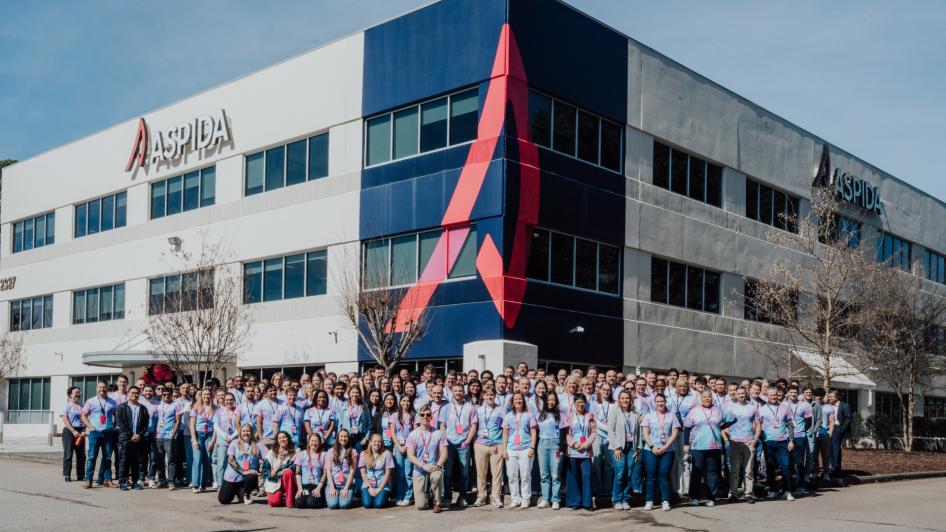
Building a strong learning culture requires more than offering training—it requires leaders who model growth, encourage collaboration, and create opportunities for people to apply what they learn. Meghan Winters, Lead Training and Development Manager at Aspida, shares how her organization develops leaders, fosters meaningful engagement, and uses AI as a coaching partner.
Show Notes: Aspida’s Meghan Winters shares how to build a culture of learning in organizations. Her takeaways include the following:
- Meaningful learner engagement begins with organizational culture—and with leaders who actively invest in employee development.
- Facilitators can create more effective learning experiences by shifting from being the primary teacher to guiding collaborative conversations.
- The most important learning often happens beyond the classroom, through practice, peer interaction, and on-the-job application.
- Developing leaders requires more than management skills; it calls for self-awareness, emotional intelligence, and a commitment to developing others.
- AI can support L&D professionals as a coaching partner, helping them reflect, explore their own insights, and prepare for challenging conversations.
About Meghan Winters:
Meghan is a Learning & Development Strategist who helps organizations grow by developing the next generation of leaders. She designs high-impact learning experiences, leverages AI, and creates programs that foster connection. She is passionate about creating transformational spaces where people can learn from one another and put learning into action. Her mission is to develop leaders who develop leaders.
Powered by Learning earned Awards of Distinction in the Podcast/Audio and Business Podcast categories from The Communicator Awards and a Gold and Silver Davey Award. The podcast is also named to Feedspot's Top 40 L&D podcasts and Training Industry’s Ultimate L&D Podcast Guide.
Transcript:
00:00:00 - Introduction
Susan Cort: What can L&D leaders do to build a stronger culture of learning?
Meghan Winters: As we're seeking to build and support and strengthen a development culture where together the organization is leaning into growth and development, I think it starts with us.
Susan Cort: That's Meghan Winters, Lead Training and Development Manager at Aspida. She shares how leaders can model continuous learning and create meaningful engagement. Meghan joins d'Vinci's Angeline Evans and me next on Powered by Learning.
00:00:31 - Sponsor Message
Powered by Learning is brought to you by d'Vinci Interactive. d'Vinci's approach to learning is grounded in 30 years of innovation and expertise. We use proven strategies and leading technology to develop solutions that empower learners to improve quality and boost performance. Learn more at dvinci.com.
00:00:54 - Meet Meghan Winters
Susan Cort: Joining me now is d’Vinci Client Solutions Consultant Angeline Evans, and our guest, Meghan Winters, [00:01:00] Lead Training and Development Manager at Aspida, a financial services and insurance company based in Durham, North Carolina. Welcome to Powered by Learning, Meghan.
Angeline Evans: Hi, Meghan. Thank you for joining us.
Meghan Winters: Yeah, thanks for having me.
Susan Cort: Meghan, start out by telling us a little bit about your background and your role at Aspida and what Aspida offers.
Meghan Winters: So I have been in learning and development pretty much in some form or fashion my entire career. So, to date myself at, you know, probably over 20 years. And , I consider it a privilege. I think I have one of the best jobs in the world. And so my role at Aspida is to support the development of all of the employees, to support, support their growth and the direction, uh, they're wanting to go.
And one of the things I most love about Aspida is the, I describe it as a wild investment and commitment to each of the employees' growth and development.
Angeline Evans: That's wonderful.
Susan Cort: And, and explain just a little bit more about what your company does.
Meghan Winters: Yeah. So we consider ourselves a tech-forward [00:02:00] insurance, uh, company providing retirement solutions, so through annuities. And one of the most amazing things is really leaning forward into the latest technologies to be able to deliver seamless experiences with clients and customers.
Susan Cort: Probably requires a little training.
Angeline Evans: Probably.
Meghan Winters: It does, it does.
00:02:20 - Career in Learning & Development
Angeline Evans: So you've been doing learning and development for 20 years. What drew you to this work?
Meghan Winters: Yeah, great question. So early on I recognized I would love to find a career, uh, that really matches just my values and where I want to invest. And what I found was supporting people, investing in people was just something that really aligned with how I wanted to, invest my career. And on early on, I started getting some really positive feedback about the impact I was making. And so it just kept going and moving and rolling into something I was able to do. And I really do, , consider myself very grateful for the work I get to do every day.
00:02:57 - The Practice of Being Present
Angeline Evans: It is such a people-centered job. I, I love it too for very [00:03:00] similar reasons. Do you feel, since you've started and to where you are now, how has your approach evolved as a learning and development leader and as a trainer and facilitator?
Meghan Winters: Uh, one. Yeah. One of the things that I've probably noticed the most, especially in the last few years, is I've just learned and I'm practicing a lot more just the practice of being fully present.
And so what I mean by that is maybe leaning less on trying to deliver the perfect outline or the perfect presentation, and I'll come in prepared and at the same time, really trying to stretch myself to be able to sit with the participants, with myself, and really, facilitate a conversation where,where, where it's gonna go and, and allow the space to be co-created by everyone there.
Susan Cort: And to listen to them too.
Meghan Winters: Exactly.
Angeline Evans: Has that, like, talk to me about that experience. Has that been challenging or have you found it to come naturally? Like, I mean, because presence isn't a, is a skill you have to build. I mean, [00:04:00] it's.
Meghan Winters: Yeah, definitely. For me, I would not describe it as
Angeline Evans: Yeah, that's kind of what I was feeling as you were saying that. I'm like, I do ch - I have to make an effort to really make myself present in life and in, and professionally. So I can only imagine as a facilitator, you know, I, it's been some time since I've been facilitating. I'm more behind the scenes now, but it's a, like, it's different, you know, you're on, you're driving the show.
Meghan Winters: Yep, yep. And I think you're right. It's something that we can learn and practice. And while it, while it's simple, on one hand, it's not easy, right? And so the last few years I've really, um, this has kind of been front and center for me in my own development and, and I can see a meaningful difference. And I can, lot of a lot of times tell times when, okay, okay, I was a little distracted there or I was finding myself jumping ahead,internally rather rather than really being able to stay in the moment with everyone.
And, and I agree, Susan, that really speaks to being able to listen and respond to, uh, what's coming up with the group and where [00:05:00] we can go from there.
Susan Cort: We have heard from other guests on Powered by Learning about the importance of that collaboration and how the collaborating makes the learning more meaningful for the learners, but it also helps you as the educator to, to hear from them what they need and what's, what's really having an impact.
Meghan Winters: Yeah, I totally agree.
00:05:17 - Meaningful Learner Engagement
Angeline Evans: So engagement is something that I know you've said you're particularly passionate about. What does meaningful learner engagement look like to you or feel like to you?
Meghan Winters: Yeah, I love this question. I think if I had to boil it down it to one thing, what does what does meaningful like? It would be developing a culture your company, within your group, wherever, um, you're presenting or which can be difficult. What does that look like? And I know when I heard about the opportunity to interview at Aspida where I am now, one of the first things I did, I think with a lot of people, of was I jumped online, the company, and I came across people officer, [00:06:00] and then boss, the senior director of learning and development, and they had both created different content videos that they put out into the world about the importance of developing
And what I recognized early on was on this company seems to not just not be hiring for this role, but there seems to be a culture. And that was really that was confirmed when I jumped in and got the job, the culture was already there. And, the privilege in coming and supporting it. And it wasn't just those two, it really was down for the executive team. In fact this year I remember in January we had a session with executives and I had to do at the end, which this is not this is not unusual for us, is, "Okay, go around and I'd like the to share what's the most important thing for you to do that will be most impactful in the organization in the next month in light of our conversation." Everyone went around and then our CEO, Lou Hensley went last and he shared the most important thing [00:07:00] for me is to develop my team.
And I just walked out and thought "Man, it is. When it's top down like that, there’s a real engagement culture, we can see happen. And then again, just last month we had a session with all of our leaders. So there were about 50 leaders in the company and I asked our CEO to come back and just field some questions from the team about leadership and he was looking for hoping of my last questions questions was what, what's the one thing you thing you want to see from our leaders? And he said, develop your teams. So we're just this commitment of leaders to invest in people. It just has a huge effect on our culture. Culture is one where people really show up. They really show not just they, show up in up in attendance, right?
We have filled rooms which we love to see but they are leaning in. I remember my first month doing some training [00:08:00] sessions and say 50% of people have had computers out and they were kind of, they were kind of multitasking had a session yesterday.
I think I saw two you know there were over 50 people in the. And I love to see it, right? We love to see that shift of... there's a culture being developed of people really engaging in learning
Susan Cort: They're probably seeing the value of your learning and realizing, okay, I don't need to multitask. This is interesting enough. It's valuable enough. And maybe through your modeling, you're teaching them to be present too.
Angeline Evans: Yeah.
Meghan Winters: Yeah I hope I certainly hope
Angeline Evans: And I love that response because you don't often hear people describe engagement as starting before they enter the classroom. Like engagement totally started before they even came to your training. They came in with the intention to be engaged, which is just super cool.
Meghan Winters: Yeah, one of the things that build on that too is I think
is I mostly that happens outside outside the classroom so to say Um and what I mean by that strong action bias. [00:09:00] So and just how I mentioned with the executive session, session we're we exiting the classroom with the sense of sense that's where the learning really. And so we use we the 70-2010 model where believing that 10% of the learning happens in that classroom environment, 20%, 20 in the of learning from one another, but really but 70% is happening outside the classroom where we're putting it into practice.
And so just what you're saying just what you're even before we get to the room, they've to the been they've been practicing.
Angeline Evans: Right.
Meghan Winters: been putting it in practice. We're really really debriefing that sessions.
Angeline Evans: So break that down for me more. How, through the learning design and the trainings that you're creating, where are the opportunities for connection and collaboration and learning from one another and from peers?
Meghan Winters: Yeah. So pretty much any session learning environment highly collaborative, highly interactive. And so early in my career, career
[00:10:00] 10, 10 15 I would sayI would, I did about 80% of the speaking. It really was more of a teaching where we have a topic, I'm presenting though ideas, maybe I'm inviting some feedback or like debriefing but for the most part I am the one um bringing forward the ideas that we're talking.
I really shifted that that to having a room present about 80. I'm contributing about 20%. So really seeing my leadership from shift a teacher to a facilitator, trusting that we have 50 people in a room and they have 20 years of experience, how many years of that, is that I a lot of years of experience, much more than I do, right? If I can facilitate, I can tee up conversations those forward that's gonna be more effective learning environment. We just know that the people are involved in others that spurs our growth and learning as well.
00:10:57 - Developing Leaders at Every Level
Angeline Evans: It does. That's one of my favorite [00:11:00] tactics. Uh, so you talked a lot about the leadership development, um, and, and this culture that you have at Aspida. So what capabilities from your perspective do you think leaders need most today?
Meghan Winters: My perspective, okay, this is this is kind of is kind of a secret I consider everything leadership.
Angeline Evans: Yeah.
Meghan Winters: So we have trainings at every level. So we have a high intensity program seven months for more early career high potentials um and that's a small cohort have competency training for the entire company. We have leadership development programs. Really all of the leadership development. So what I mean by that is by that is if we describe leader not by title not by if they officially manage people but if we describe a leader as an influencer then what I'm looking for what I'm looking to develop is leaders who develop.
So if I had to, really pin down what's the most the [00:12:00] important thing to develop other leaders, leaders be would a commitment, like a value orientation orientation around the developing leaders and then a skillset able to do that trusting, you know, one phrase that I've heard that resonates with me is multiplication means mission edition every time time. So if we want to make a meaningful impact, we can actually other people developing others and develop others, impact impact is gonna be wildly far-reaching in terms of skillset, I had to point to two things things about it take to develop leaders? The first thing that comes to mind is to mind is self-awareness um which is there's so much to unpack and the other would be some sort of emotional intelligence ability to connect with people ability to relate ability to build into others.
Angeline Evans: And how are you doing that in your programs? Is that woven in almost like as an, as a component woven throughout all of the key [00:13:00] topics or. 'Cause I imagine you can't just do one training on self-awareness and one training on emotional intelligence. It's gotta be embedded everywhere, Right.
Meghan Winters: Right? Yeah totally
Angeline Evans: Yeah.
Meghan Winters: Almost every training environment training environment session we do there is going to be a self-reflective component Um and we'll be pretty upfront rarely do I think somebody comes into comes learning development space and hears and something that they've never, heard before.
Angeline Evans: Mm-hmm
Meghan Winters: Maybe we'll share some statistics or or different things like things like that that are maybe new but for the most part when we're talking about communication about intelligence, these concepts aren't completely
Angeline Evans: Right
Meghan Winters: but there is a self-reflective component that I think is critical where am I the question.
Angeline Evans: Mm-hmm
Meghan Winters: I heard this before? Do I, this even could I teach this? Like I think teaching something ways is easier than asking the question that question of. But am I doing this where am I at with this what would my growth in [00:14:00] this look like
00:14:01 - Balancing Fun and Challenge
Angeline Evans: Would you say it's those aspects that really changes the performance or behavior or what. And if not, and, and if there's more to it,
Angeline Evans: how do you balance when you're creating a learning experience, how do you balance creating something that people enjoy and are engaged with after they, like when they're there versus changing, challenging them and changing their performance and their behavior?
Meghan Winters: Yeah, I love that. I love that both and I want I want all of it
Angeline Evans: Yeah.
Meghan Winters: Um one of our one of our mantras at Aspida is to have. I remember when I came in well really it started when I checked out the website They had this video that was just super fun I was like Oh my goodness I didn't even know companies could be
Angeline Evans: Yeah.
Meghan Winters: and it was very consistent with the consistent culture And so it's so it's got to be fun, right? I mean if it's boring if it's irrelevant people, if want to be there.
Angeline Evans: Mm-hmm
Meghan Winters: want something. Maybe if it's fun[00:15:00] and they want to be there, man.That's a different thing altogether.
And it might just be my personality, but I think part of fun is stretching. Part of fun is challenging, and part and learning right isn't it inherently because we're growing. So I think there's a balance there.
Angeline Evans: Yeah.
Meghan Winters: of we can't take them zero to 60 but
00:15:24 - Advice for L&D Leaders
Susan Cort: I think all of our listeners now wanna work at Aspida. This
Angeline Evans: Yeah.
Susan Cort: is amazing. What, you know, you've built and, and supported, uh, a great culture and a great learning culture. What advice would you give to people listening who maybe say, "Wow, I wish we had more of that in our organization."
I mean, I know you stepped into a good culture, but, but what advice would you give for people to really build on what they have in their organizations?
Meghan Winters: If I had to pick to one thing, know that there's only so much
so much that's in our control, I think the one comes to mind for us to really consider ourselves the lead learners. [00:16:00] And by that is that we go first, separate pace. And so does it look like for us to be investing in our development development? Easier to focus on others and then lose our, you know, our commitment to our own growth. And so as we're seeking to build and support and strengthen a development culture where together the organization is leaning into growth and development I think it starts with us.
Angeline Evans: Mm-hmm. Yeah, you're absolutely right.
Susan Cort: Good advice.
00:16:34 - AI as a Coaching Partner
Angeline Evans: So before we wrap up, we always like to talk to our guests about AI and how they're using it and just get a pulse check because all of our listeners want a pulse check too. So how are you incorporating AI into your workday now?
And do you see any really just great and grand opportunities for it in L&D? I mean, I know there's a lot just, you know, every single day we see a new tool or something that we can use for content creation and things like that. Tell me more about how you're using it.[00:17:00]
Meghan Winters: Yeah, 1000%. It, it almost feels impossible to keep up with all the tools and all the changes. And so I think probably like a lot of us, um, I think we're in a season culturally of going through almost just a mindset shift of, okay, there's this tool in all of these different capacities, how do I integrate it really holistically into my so probably like a lot of L&D professionals. processing, we're moving toward process automation, which has been helpful. We're using it for content creation. I'll have it challenge, um, know, my ideas or outlines and, you know, just really help with a lot of that creative process.
I think if I had to pick one thing that I found the most helpful is to use it as a coaching partner. And so, in fact, I just did this morning. I had to prepare for more difficult conversations. To make sure I went and prepared.[00:18:00]
And so use a prompt something like, you're my coach, my professional coach or my relational coach. Um, facing a, you know,challenging situation or I have this, I struggle. want you to ask me, ask, I'll give it a set of questions.
I want you to ask me seven questions. one at a time to help me come up with the solution.So what I'm doing there is I don't, I you AI is great and what you should do.
Angeline Evans: Yes.
Meghan Winters: confidence. What I'm looking for is I'm actually looking for, for a tool to help draw out of me my insight, my wisdom, my values, what I, you know, help me understand how I'd like to approach a situation. Something that's been wildly helpful for me and I've had our leaders do. So I mentioned this action bias a bias couple sessions ago with our six-month leadership leadership development program. I had all the leaders use, use this coaching prompt. And then this is, this is like my favorite. Like if I have to pick my favorite thing, this is[00:19:00] thing.
Then of the leaders is is mentoring the individuals in our, in our, intensive program, one of the early career folks, he and had this individual had this individual do the same thing.
"Hey, I want you to use this coaching prompt, a question and to me that's it. Leaders. Leaders who will develop leaders.
Angeline Evans: For me on some things coming up. That's really, that's such a great idea. I think we use it so often for efficiencies that we forget we can use it as a training tool. So thank you for that aha moment there.
Meghan Winters: Great advice. wait to hear how that goes.
Angeline Evans: Yeah.
00:19:42 - Closing Thoughts
Susan Cort: Meghan, it's been so nice to talk to you and I have to say your, your energy, uh, is really contagious. You've got such a, a passion for learning and speed is lucky to have you. We're lucky to have you on Powered by Learning and we appreciate you sharing your insights.
Meghan Winters: Well, thank you so thank you so much for having me. This is, this has just been delightful.
Angeline Evans: Thanks, Meghan. [00:20:00] This was such a great conversation.
Susan Cort: My thanks to d'Vinci's Angeline Evans and our guest, Meghan Winters from Aspida. If you have an idea for a topic or guest, please reach out to us at poweredbylearning@dvinci.com. We also invite you to leave us a review on Apple Podcasts and subscribe wherever you listen to your podcasts
Ready to Connect?
Contact us today to start the conversation. We work with you to find innovative solutions that drive a sense of shared accomplishment and trust.