d'Vinci Interactive is an award-winning comprehensive learning solutions provider for corporate, government, medical, non-profit, and K-12 target markets.
Designing Training for Real World Performance
November 10, 2026
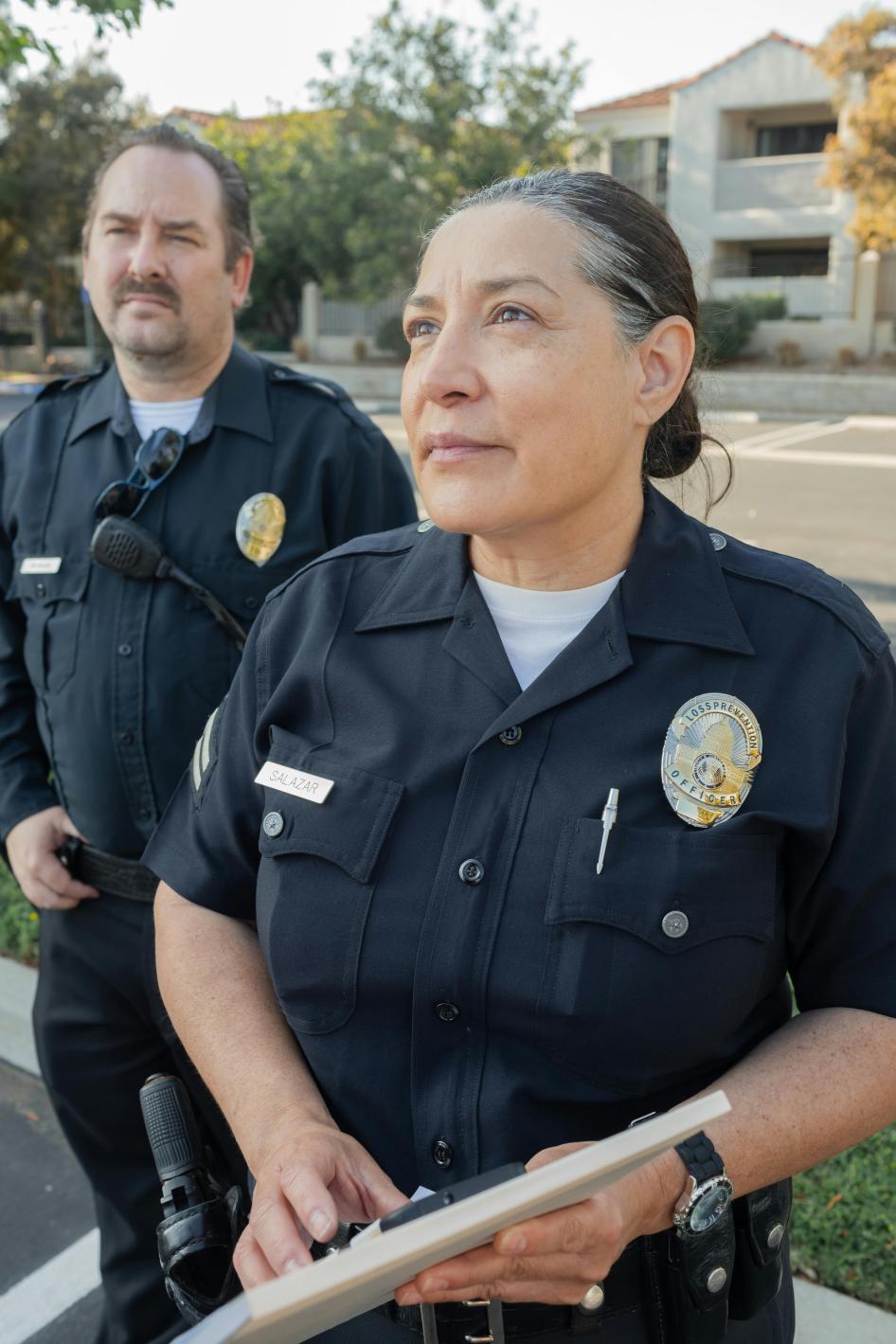
A police officer faces a person in crisis. The situation is tense, unpredictable, and escalating.
The officer has completed training on five de-escalation techniques. They can identify each technique on a quiz and define them correctly.
But can they select the right technique in the moment, apply it appropriately, and adapt as the situation changes?
That is the difference between covering content and preparing people to perform.
During our recent ILEETA webinar, From “We Covered It” to “They Can Do It”: Designing Training for Real-World Performance, d’Vinci’s Lead eLearning Specialist Jenica Jones and I explored three principles for creating training that helps learners make sound decisions in complex, high-pressure situations.
The conversation resonated with attendees representing law enforcement agencies, public safety organizations, colleges, training providers, and consulting firms from 26 U.S. states, four Canadian provinces, the Netherlands, and Pakistan.
Participants included representatives from organizations such as the Florida Highway Patrol, Missouri Department of Corrections, Oregon Department of Public Safety Standards and Training, Pennsylvania Office of Administration, Wisconsin Department of Justice, Surrey Police Service, Saskatchewan Provincial Protective Services Branch, and Punjab Police Lahore, along with numerous municipal police departments, sheriff’s offices, police academies, colleges, and private training organizations.
Their participation reinforced an important truth: effective training must connect directly to the decisions people make and the work they perform.
Start with what learners need to do
Many learning objectives begin with what learners need to know:
Participants will be able to recall the five techniques of de-escalation.
That objective may support knowledge acquisition, but it does not describe the performance required in a real crisis encounter.
A performance-based objective asks learners to apply knowledge in context:
Given a realistic crisis encounter, participants will select and apply appropriate de-escalation techniques based on the person’s behavior and changing situation.
This objective gives the designer a clear target. It identifies what the learner must do, the outcome they are working toward, and the conditions in which the performance must occur.
Instead of asking, “How can we present these five techniques?” we begin asking, “What decisions must the learner make, and what does effective performance look like?”
Build scenarios around decisions and outcomes
A scenario becomes meaningful when learners must make decisions that resemble the choices they may face on the job.
In a crisis encounter, a learner might need to decide whether to create space, identify themselves, explain why they are there, or take another action. Each option should be plausible and connected to the situation.
Weak scenarios often include throwaway choices that are obviously unsafe, absurd, or unrelated. Those options do not require judgment. They simply make the correct answer easy to identify.
Stronger scenarios reflect the complexity of real work. The learner must think before choosing.
The outcomes matter just as much as the options. A realistic outcome should reflect a believable consequence of the learner’s decision. It might change the person’s behavior, introduce new information, or create a complication that requires another decision.
Real situations rarely resolve instantly. Effective scenario-based learning gives the situation room to develop. The learner makes a decision, receives new information, and then decides what to do next.
That process creates a safe space to practice judgment before facing a similar decision in the field.
Use feedback to teach
Feedback often falls short because it tells learners whether they were right or wrong without helping them understand why.
Useful feedback begins with what the learner did. It explains the reasoning behind effective performance, addresses gaps or misconceptions, connects the learner’s action to its impact, and guides future performance.
The goal is not merely to provide the correct answer. The goal is to help learners build the knowledge, judgment, and confidence to make better decisions in the future.
Not every decision falls neatly into right or wrong, either. In many public safety situations, a learner may choose a response that is reasonable but could be improved. Scenario-based learning can reflect that reality by distinguishing between good, better, and best responses.
This allows learners to explore the quality of their decisions and understand the tradeoffs involved.
Design with the subject-matter expert
Subject-matter experts bring essential knowledge and experience to the process. The instructional designer’s role is to help translate that expertise into learning people can use.
A question we should keep asking is:
What do learners need to do with this information?
That question helps the team move from content coverage to performance.
It also helps keep scenarios focused. Rather than building one oversized scenario around every technique or procedure, designers can connect smaller scenarios to specific objectives or essential learning outcomes.
The delivery method may vary, but the design questions remain the same:
- What does the learner need to do?
- What decision must the learner make?
- What would realistically happen next?
- What feedback would help the learner improve?
Begin with one small change
You do not need to redesign an entire curriculum to make training more performance-focused.
Choose one principle and apply it to one piece of learning:
- Rewrite one knowledge-based objective around performance.
- Strengthen one scenario with realistic decisions and believable outcomes.
- Revise one feedback response so it explains the reasoning and guides future performance.
Small changes can reveal larger opportunities.
At d’Vinci, we help law enforcement and public safety organizations design accessible, outcome-focused learning that reflects their policies, operational realities, and the decisions their people need to make. Whether the solution is classroom support, scenario-based eLearning, digital training, or a broader learning strategy, we begin with the same question:
What do people need to do when it matters?
If your organization is ready to move from “we covered it” to “they can do it,” we would welcome the opportunity to talk.
Learn more at dvinci.com/lawenforcement, or contact us at newbiz@dvinci.com for a free one-hour consultation.
View From “We Covered It” to “They Can Do It”: Designing Training for Real-World Performance

Ready to Connect?
Contact us today to start the conversation. We work with you to find innovative solutions that drive a sense of shared accomplishment and trust.